
INNOVATIVE MULTI-LIFE BATTERY MANAGEMENT SYSTEM
FOR FUTURE ENERGY STORAGE SOLUTIONS
INVENT will create a Battery Management System (BMS) that is agnostic, independent of specific chemistry, low cost, and entirely reusable for second life batteries. Built upon a genuine distributed modular architecture, adhering to Battery Passport it will align with the emerging international standards. All the communication protocols are conceived in wire free philosophy, using the DC power bus as a vessel to carry data between the electronic modules of the BMS.
A partnership between:


Project ID:PN-IV-P7-7.1-PED-2024-1479 founded by UEFISCDI, Romania
Project duration 03/01/2025-31.12.2026, and a total budget of TOTAL PROJECT TOTAL: 185.752€
The BMS Features

Modular & Reusable
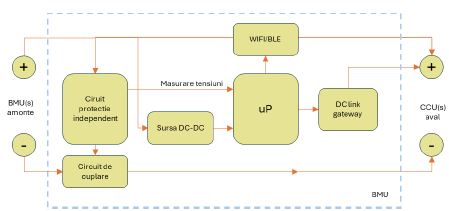
The primary innovation of the BMS lies in its distributed architecture built of incorporation of a Cell Control Units (CCU) and one Battery Management Unit (BMU)
xDC Link Data
The BMS modules communicate via the main DC bus using a newly developed power line carrier protocol (xDCLink), allowing arbitration, error correction, multiple nodes and resilient monitoring.

Battery Passport
Precise diagnosis of its performances, including Capacity, Energy, State of Charge (SoC), State of Health (SoH), Voltage, Power capability, Internal resistance, and durability factors.

IoT & Cloud Uplink
The BMU will feature a Wi-Fi communication continuously streaming to a Cloud Storage Center in compliance with Battery Passport requirements, ensuring traceability for first and second life cells.
The research team
Technical University of Cluj Napoca, Romania
Dr. Mircea RUBA
Project Manager
Dr. Gabriel CHINDRIȘ
Senior Researcher
Dr. Adelina ILIEȘ
Researcher
Dr. Claudia POP
Researcher
Eng. Paula ȘERBAN
Researcher
Eng. Sebastian URSACHE
Researcher
Siemens Industry Software Brașov, Romania
Dr. Alexandra BĂICOIANU
Partener Manager
Eng. Roberta LUCA
Researcher
Eng.Robert SZABO
Researcher
Dr. Călin HUSAR
Researcher
Eng. Tiberio BRINZEA
Researcher
Eng. Dragos STĂNICĂ
Researcher
The research outcomes
The project content activities
Stage 1 – BMS sizing and development of innovative software and hardware solutions
1.1 Sizing of the assemblies of the modular BMS system
1.1.1 Task 1.1 – Analysis of the current state of research regarding modern BMS solutions for repurposed batteries
- Analysis of Regulation (EU) 2023/1542 – establishes a comprehensive framework governing the sustainability, safety, labeling, and circularity of batteries placed on the EU market. It introduces strict requirements for design, performance, carbon footprint, and end-of-life management, including reuse, repurposing, and recycling obligations. The regulation also defines responsibilities for manufacturers, distributors, and end-users, ensuring improved traceability and transparency through digital battery passports. Additionally, it supports the integration of second-life batteries by setting technical and compliance criteria for their use. Overall, the regulation aims to promote a sustainable battery value chain and reduce the environmental impact throughout the entire lifecycle.
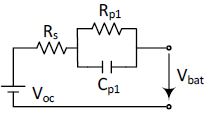
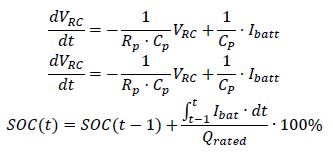
- Analysis of the specialized literature on the methodology for implementing analytical cell-modeling functions, SOC, SOP, SOH, and cell balancing – The cell is analytically modeled using a first-order Equivalent Circuit Model (ECM), whose structure includes the open-circuit voltage, the series resistance , and the parallel network that captures diffusion effects. These parameters are experimentally identified to accurately reproduce the real behavior of the cell, and the terminal voltage is computed based on the governing ECM equations. The state of charge (SOC) is estimated through Coulomb Counting, but accumulated measurement and aging errors can lead to significant deviations over time. To mitigate this, an Extended Kalman Filter (EKF) corrects SOC drift by comparing measured and simulated voltage, ensuring alignment with the actual battery response.
The State of Power (SoP) represents an essential indicator that specifies the maximum power a cell can deliver or absorb, and its estimation—based on voltage limits and open-circuit voltage—prevents overheating and premature degradation while ensuring safe and efficient real-time battery management.

The State of Health (SoH) expresses the cell’s current performance relative to its initial condition—typically inferred from capacity fade and resistance growth—while cell balancing, necessary to counter manufacturing-induced parameter variations, directly influences SoH by ensuring uniform stress, minimizing premature degradation, and maintaining safe, efficient battery operation.
Analytical thermal modeling within the BMS enables accurate prediction of cell temperature behavior, providing a solid basis for developing protection strategies and optimizing performance, especially for reused batteries where cell non-uniformity increases management complexity. The cell’s thermal response is described using a simplified lumped model consisting of a heat source, thermal capacity, convective resistance, and ambient temperature, with total heat generation—including entropic, hysteresis, ohmic, and diffusion losses—and cell temperature computed through the corresponding governing equations.
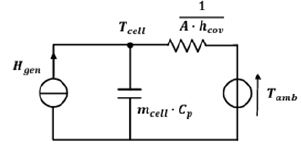
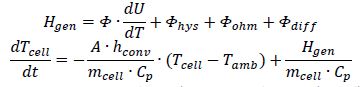
According to the project proposal, two battery architectures were selected for physical implementation—a 7-series NCR18650 Li-ion pack with 5 parallel cells per group (≈25 V, 15 Ah) and a 7-series LiFePO₄ pack (≈25 V, 20 Ah), each series string equipped with its own CCU communicating with a central BMU that also interfaces via Wi-Fi with a Cloud storage solution—while, in parallel, optimized IoT-oriented Cloud options (real-time data ingestion, scalability, security, analytics/ML) were evaluated using a Publisher (Arduino Nano 33 IoT), an MQTT Broker (Mosquitto/Docker), a Subscriber (Python + PostgreSQL), and Grafana Cloud Agent for visualization, chosen for MQTT support, flexible data schemas, and seamless PostgreSQL integration toward future intelligent analytics and bidirectional operation in the INVENT concept.
1.1.2. Task 1.2 Establishing the list of technical specifications for all hardware and software assemblies involved in INVENT
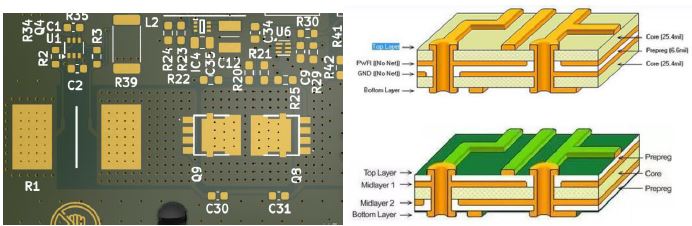
In this task, the technical specifications were defined for the number of CCU modules to be built (10 in total, 5 per battery) and the two BMU modules, initially focusing on NCR-type cylindrical cells, with identical electronics later adapted mechanically for pouch-type LFP cells using custom 3D-printed fixtures. Measurement accuracy for both CCU and BMU was set to 10 mV for voltage/current and 0.5 °C for temperature, achieved through short measurement paths, fast A/D conversion, multilayer PCB design, low-loss routing, and carefully selected low-consumption components. A protection stage using back-to-back MOSFETs and a balancing stage capable of both passive and active equalization were specified, along with the implementation of 38 Battery Passport parameters in the BMU and Cloud storage service. On the software side, the bidirectional communication flow with the Cloud was defined using MQTT topics, JSON message formats, and enhanced security, while the Cloud architecture itself includes data storage (PostgreSQL), analytics and ML processing, visualization (Grafana), and a web UI for real-time monitoring and control.
1.1.3 Task 1.3 Design of the CCU (Cell Control Unit) module
The Cell Control Unit (CCU) must provide independent cell protection with balancing for overvoltage and undervoltage, protected coupling to load or charger with upstream and downstream monitoring, measurement of voltage, current and temperature, DC-bus data transmission to the BMU/CCU, and real-time execution of balancing, SoX estimation, digital twin, communication algorithms, as well as battery-passport and diagnostic logging.
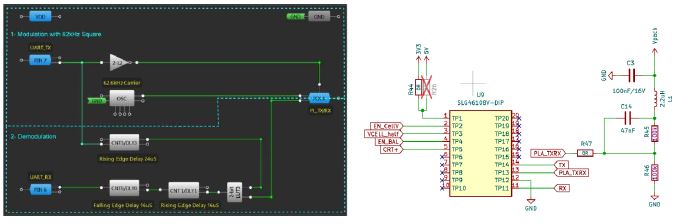
For the design of the CCU module, a robust engineering procedure was applied by implementing a MATLAB simulation/parameterization script that ensured correct sizing of electronic components according to the technical specifications defined in Task 1.2, parametric simulation of electrical variations under temperature, voltage, current, tolerance, and yield conditions, application of derating rules, design of the voltage-balancing stage, selection of a DC-link protocol using Renesas GreenPAK pASIC devices, reliability modeling under aging and harsh-operation scenarios using SISW tools, application of cost and manufacturing constraints, and generation of Gerber, PnP, and ODB+ fabrication files through KiCAD CAD/CAE systems.
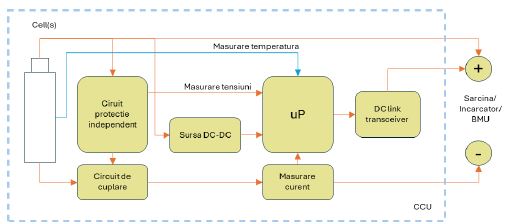
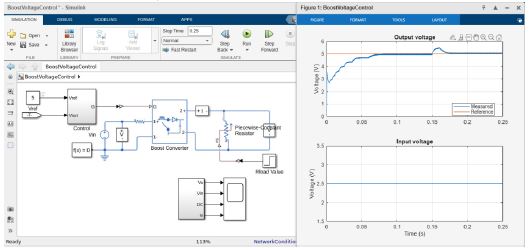
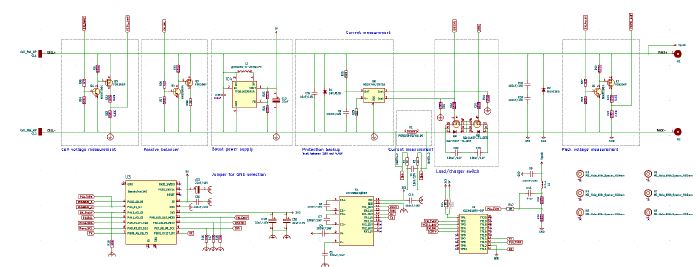
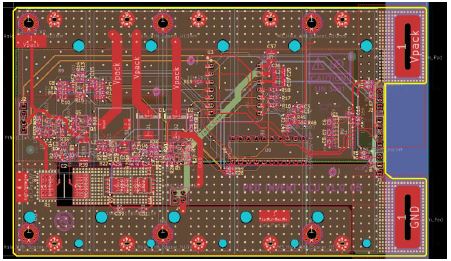
SISW actively supported UTCN during this design phase to ensure that the CCU architecture would integrate seamlessly with future software components—defining clear specifications for data formats (JSON-based), sampling rates, and measurement accuracy—while the BMU module, which must interface through the DC link with downstream CCUs and upstream BMUs, securely connect to the Cloud via BLE or Wi-Fi, and perform real-time data acquisition, storage, transmission, analysis, dynamic balancing, SoX estimation, digital-twin processing, communication, and battery-passport/diagnostic logging, was specified accordingly.
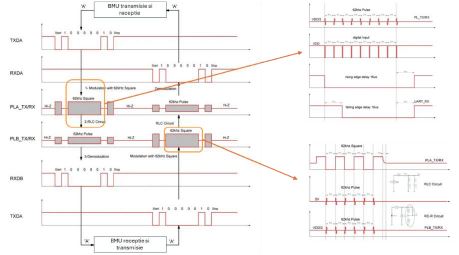
For the BMU design, a robust engineering procedure was implemented using a MATLAB simulation/parameterization script to ensure correct sizing of electronic components according to monitoring and control requirements, parametric simulation of electrical behavior under temperature, voltage, current, tolerance and yield variations, application of derating rules for intrinsic and extrinsic thermal effects, reliability enhancement through aging and harsh-condition simulations supported by SISW tools, adherence to cost and manufacturing constraints, generation of Gerber, PnP and ODB+ fabrication files via KiCAD for DfM analysis, and selection and simulation of a Renesas GreenPAK pASIC–based DC-link protocol including modulation and demodulation mechanisms.
SISW support was essential in this stage, ensuring that the BMU design would operate seamlessly with the software responsible for data interpretation and with the bidirectional Cloud communication system, while standardized JSON data formats, transmission frequency requirements, and Wi-Fi security mechanisms (authentication and encryption) were defined for BMU-to-Cloud communication.
The BMU will function as an advanced Publisher within the existing architecture, securely sending aggregated data to the Cloud MQTT Broker (Mosquitto) while also supporting full bidirectional communication—subscribing to specific MQTT topics for remote commands, configuration updates, and firmware uploads—which enables remote control and management of the battery pack, with all collected data stored in PostgreSQL by the Python Subscriber, visualized in Grafana, and used to feed Cloud-based Machine Learning algorithms for operational decision-making.
1.2 Development of INVENT software solutions – Part I
1.2.1 Task 2.1 Development of the Real-Time Software-in-the-Loop (RT-SIL) application
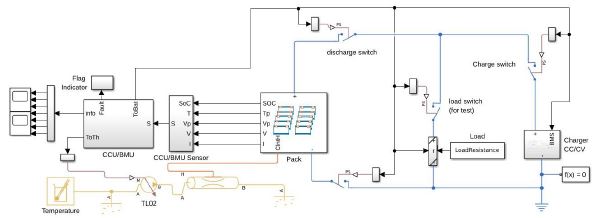
To build a real-time digital twin of the entire system, a Typhoon HIL simulation was developed, modeling each CCU1–7 as voltage-source power elements with cell-level sensing (U, I, T) and data-transfer labels to the BMU, while the BMU block includes both pack-level measurements and all Battery Passport mathematical functions plus data-output interfaces, and the complete model—illustrated in Fig. 16 with the C-function on the left implementing a full 7-cell electrical and thermal model—allows simulation of nominal, heterogeneous, or faulted cell behaviors via a matrix-based structure that optimizes computational flow and enables flexible system reconfiguration.
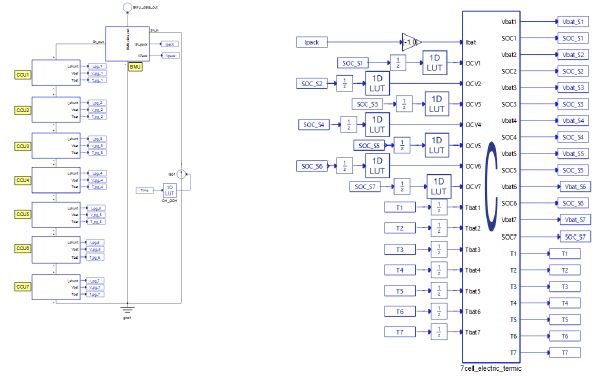
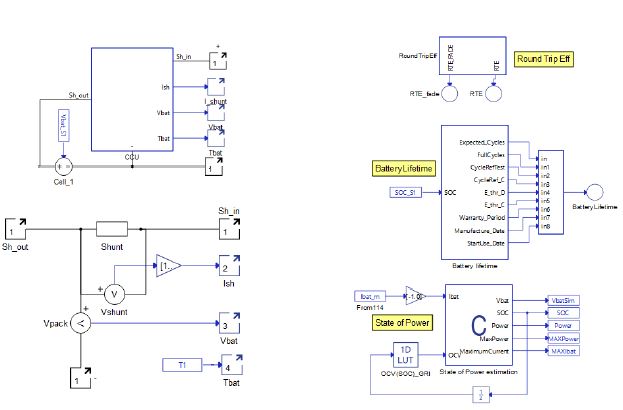
The configuration shown in Fig. 15 replicates the real system planned for construction in 2026, with flexible and interchangeable model-initialization parameters defined in Task 1.2. The executable diagram of the CCU and BMU blocks (Fig. M2) includes, on the CCU side, an electrical entity that injects the voltage imposed by the cell’s simulation model together with measurement modules for voltage, current, and temperature, while the BMU also incorporates these measurements alongside Battery Passport functions such as electrical-cycle efficiency, SOP, battery lifetime metrics, and SOC estimation via a Kalman filter, with cell-balancing and additional Passport parameters planned for 2026. To ensure the simulator’s feasibility, all system parameters were pre-identified experimentally on real batteries subjected to extensive standard and random load cycles, with measurements taken every 0.25 s at high precision. In 2026, each of the seven test cells will be individually characterized and the model populated accordingly, enabling real-time simulation scenarios to be compared against measured data, with the resulting deviation representing the simulator’s sensitivity analysis.
SISW played a central role in preparing all software elements required for Typhoon HIL implementation—developing BMS behavioral models (simulated CCU/BMU measurements and internal management algorithms), accurately replicating the full Cloud communication stack including MQTT simulation with JSON publishing, command subscription and authentication mechanisms, and ensuring that both uplink and bidirectional data flows were faithfully reproduced—thus enabling the RT-SIL application to validate the communication specifications defined in Task 1.2 and the BMU design from Task 1.4, while allowing closed-loop testing to detect and correct potential issues in communication logic, data handling, or system response, ultimately ensuring reliable real-world integration between the BMS and the Cloud within the INVENT project.
1.2.2 Task 2.2 Development of the code functions implemented in the BMU processor (embedded solution) – Part I
- a) State-of-Charge (SOC) estimation using the Extended Kalman Filter (EKF)
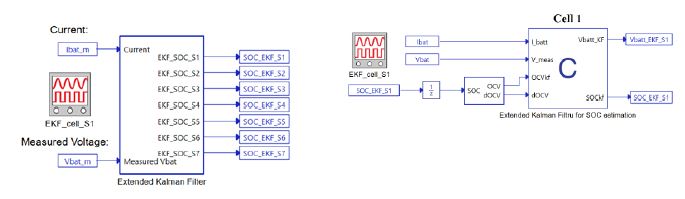
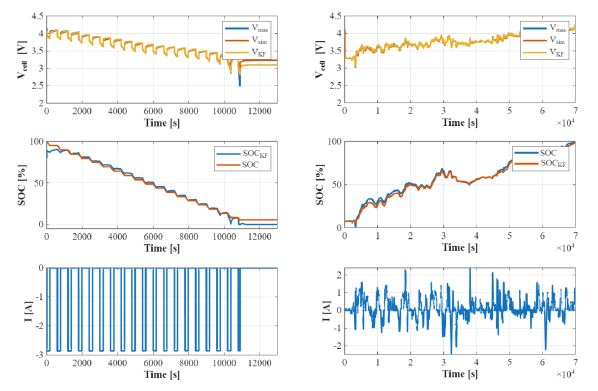
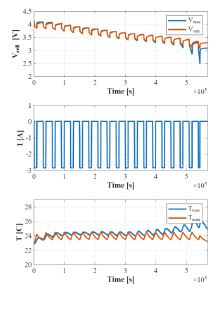
Figure 17 shows the function that generates the battery cells’ state of charge using an Extended Kalman Filter (EKF), implemented as a block with two inputs—charging/discharging current and cell voltage —and seven outputs corresponding to SOC estimates (SOC_EKF_S1…Sn), each computed by a dedicated Typhoon HIL C_function block, while Figure 18 details the EKF algorithm for cell S1, which updates the open-circuit voltage OCV, its derivative dOCV, and the estimated terminal voltage used for validation, and laboratory tests performed on an LG INR18650 M29 cell under two current profiles (1C pulses and a 21-hour cycle) demonstrate that closely tracks the measured voltage , correcting initial SOC errors (e.g., 80% vs. 100% and 50% vs. 7.327%) and converging to the real state of charge even when initial BMS SOC values are inaccurate.
- b) State of Power estimation
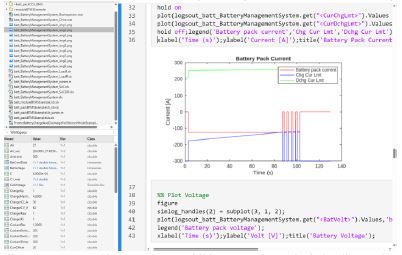
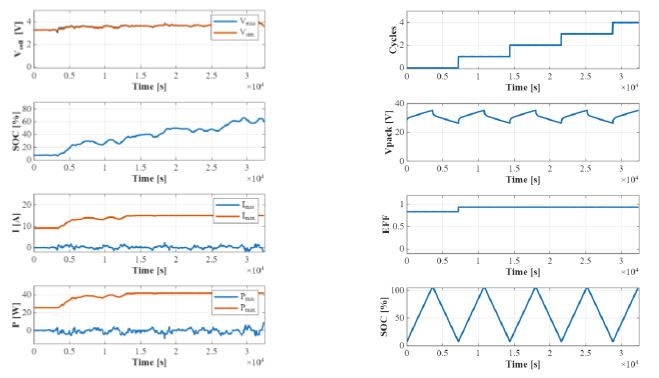
When building the SoP calculation function, the maximum current deliverable by the cell at a given state of charge was considered, but since these theoretical values can reach 10–15 times the nominal current—levels that would rapidly degrade the cell—current limits were imposed to obtain realistic results, with Fig. 20 showing the SoP estimation algorithm running alongside the cell model and displaying measured and simulated voltage, SOC, actual and maximum current, and actual and maximum power, where the example illustrates that low SOC results in low maximum power which increases during charging until reaching the imposed current limit.
- c) Estimation of per-cycle electrical efficiency and quantification of the number of cycles
This function computes two key quantities—the total number of charge–discharge cycles completed by the battery over its lifetime and its electrical efficiency defined as the ratio between total charged and discharged energy—and as illustrated in Fig. 20 (right), a predefined cycling profile (0–100% charge and 100–0% discharge repeated four times) demonstrates that the cycle-counting module accurately identifies each cycle while the efficiency converges to about 0.98, a realistic value for a healthy battery.
- c) Estimation of per-cycle electrical efficiency and quantification of the number of cycles
This function computes two key quantities—the total number of charge–discharge cycles completed by the battery over its lifetime and its electrical efficiency defined as the ratio between total charged and discharged energy—and as illustrated in Fig. 20 (right), a predefined cycling profile (0–100% charge and 100–0% discharge repeated four times) demonstrates that the cycle-counting module accurately identifies each cycle while the efficiency converges to about 0.98, a realistic value for a healthy battery.
In this stage, SISW prepared and implemented the critical functions enabling the BMU to connect to a Wi-Fi network and maintain a stable link with the MQTT Broker (Mosquitto in Docker), developing the embedded MQTT client for publishing CCU and BMU sensor data in JSON format compatible with the Python Subscriber, PostgreSQL, and Grafana, while also implementing full bidirectional communication—allowing the BMU to subscribe to specific MQTT topics for receiving commands, configurations, or updates—and integrating robust security mechanisms such as broker authentication and, where required, traffic encryption, thus establishing the core Cloud-connectivity backbone without which the BMU could neither transmit essential battery-state data nor receive control instructions, ultimately enabling the BMU to function as an active, intelligent node within the INVENT architecture for advanced monitoring and predictive battery management.
1.2.3 Task 2.3 Development of Cloud functionality software – Part I
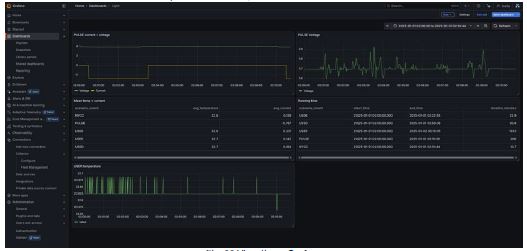
- Implementation of the web-based user interface for the Cloud entity’s communication with the user – An intuitive prototype Web interface was developed as a central user interaction point, enabling real-time visualization of battery-pack status, access to historical data, report generation, and future bidirectional control of BMUs, while integrating seamlessly with the INVENT data pipeline—where CCU-generated and BMU-aggregated data are published to the MQTT Broker, stored via the Python Subscriber in PostgreSQL, visualized through Grafana Cloud dashboards, and ultimately fed into Cloud-based Machine Learning algorithms for enhanced state-of-health estimation and predictive battery management, as illustrated in Figure 8 through real-time cell-level measurements of current, voltage, and temperature.
- The mechanism for managing and storing information received from the BMUs was enhanced by extending the existing data infrastructure—built on the Publisher (Arduino Nano 33 IoT), MQTT Broker (Mosquitto), and PostgreSQL storage via the Python Subscriber—through robust and scalable data ingestion with integrity validation, secure transmission via authenticated and encrypted MQTT communication, protected storage through controlled database access and optional data-at-rest encryption, and dynamic schema adaptation with batch insertion to efficiently handle high data volumes.
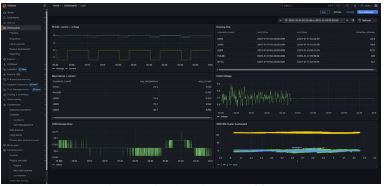
- The first Machine Learning algorithm—DBSCAN—was implemented to post-process historical BMU and CCU data stored in PostgreSQL by identifying dense clusters and flagging low-density points as anomalies, using current, temperature and voltage as inputs, with key parameters such as eps = 0.3, min_samples = 10 and Euclidean distance, automatic neighbor-search optimization (kd-tree/ball-tree/brute) from scikit-learn, and visualization in Grafana (Fig. 23) showing two main operating-state clusters, while future refinement will test alternative DBSCAN settings and additional methods like Isolation Forest to enhance anomaly detection and support the development of an intelligent Cloud platform for interpreting atypical battery behavior within the INVENT project.
1.3 Development of CCU and BMU hardware solutions – Part I
1.3.1 Task 3.1 Construction of CCU and BMU electronic modules – Part I
The development of the CCU and BMU modules in this phase consists of prototyping on the production line using Gerber design files refined through a manufacturability (DfM) analysis with the fabrication partner, aimed at defining minimized single-step assembly processes (one reflow step for SMT and selective solder-wave for THT), selecting SISW-recommended components compliant with international battery-adjacent circuit standards, optimizing production so that a single PCB and stencil set can serve both CCU and BMU variants, improving SMT pad geometry and solder-mask design for industrial-grade reliability, employing two solder alloy versions (SAC305 for cost optimization and SAC387 for high-temperature and corrosion-resistance performance), and validating the fabricated modules through optical inspection (AOI), wettability tests for 200 µm SMT pitch, and ICT functional testing with flying-probe.
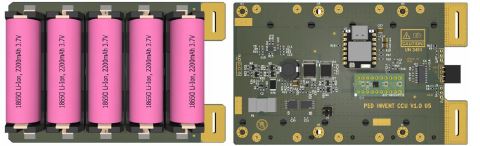
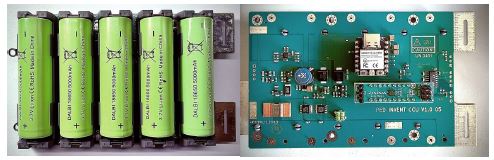
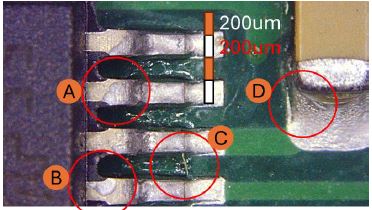
The prototype fabrication of the CCU and BMU modules resulted in fully assembled boards validated through DfM analysis, the use of SAC305 and SAC387 solder alloys for cost and reliability optimization, AOI and ICT robustness checks, and a complete manufacturing report with production guidelines, while SISW provided essential technical support to UTCN by identifying components that not only met the required specifications (e.g., high-performance microcontrollers, precision sensors, robust Wi-Fi modules) but were also available, cost-effective, industry-compliant, and compatible with the embedded software (Task 2.2) and existing Cloud architecture—ensuring that the accuracy and reliability of CCU/BMU hardware will support correct data acquisition, Cloud-based Machine Learning algorithms, and the safe, efficient management of reused batteries envisioned in the INVENT project.
The summary of the project activities
Within the project Innovative Reusable System for Battery Management Applied to New Energy Storage Solutions – INVENT, the following activities were carried out in Stage 1:
- Task 1.1 Analysis of the current state of research regarding modern BMS solutions for repurposed batteries
The feasibility of the INVENT project is grounded in the requirements of the new Battery Passport standard. The study integrates the analysis of European legislative requirements, electrical and thermal cell modeling, SOC/SoH/SoP estimation, balancing strategies, and the hardware–software architecture needed for Cloud-based intelligent data management. - Task 1.2 Definition of the technical specifications for all hardware and software assemblies involved in INVENT
This task defined the hardware and software specifications for the CCU and BMU modules, including the implementation of 38 Battery Passport parameters and their integration into the Cloud infrastructure. In parallel, MQTT protocols, JSON formats, security requirements, and data storage, processing, and user-system interaction functionalities were established, forming a coherent foundation for developing a fully digital modular BMS. - Task 1.3 Design of the CCU (Cell Control Unit)
The CCU was designed using a robust engineering procedure based on MATLAB simulation/parameterization scripts, ensuring correct component sizing according to Task 1.2 specifications, parametric simulation under temperature/voltage/current variations and tolerance/yield ranges, balancing-stage design, DC-link protocol selection, reliability modeling (aging and harsh-operation scenarios), cost and manufacturing constraints, and Gerber, PnP, and ODB+ fabrication file generation using KiCAD. - Task 1.4 Design of the BMU (Battery Management Unit)
The BMU was designed following a similar robust procedure, including component sizing, thermal derating, DC-link protocol selection using Renesas GreenPAK pASIC devices, modulation/demodulation simulation, SISW-supported reliability integration, cost/manufacturing constraints, and fabrication-file generation with KiCAD. - Task 2.1 Development of the Real-Time Software-in-the-Loop (RT-SIL) application
A real-time digital replica of the CCU–BMU system was implemented in Typhoon HIL using Battery Passport-compliant functions and a matrix C-structure for seven cells, enabling validation of electrical and thermal behavior, BMS logic, and Cloud communication flow, laying the groundwork for the 2026 physical system. - Task 2.2 Development of embedded code functions implemented in the BMU processor – Part I
Battery Passport-required functions were developed and validated in the digital cell model, while the software infrastructure created by SISW enables bidirectional MQTT communication between the BMU and the Cloud, ensuring real-time transmission and management of critical battery data. - Task 2.3 Development of software for Cloud functionalities – Part I
A WEB interface integrated with the Cloud infrastructure was developed, enhanced with secure mechanisms for data storage and processing via MQTT, and the first ML algorithm (DBSCAN) was implemented for cluster and anomaly detection, preparing the platform for advanced predictive analytics. - Task 3.1 Construction of CCU and BMU electronic modules – Part I
Prototype fabrication yielded fully assembled modules validated through DfM analysis, optimized production processes, and the use of SAC305 and SAC387 alloys for cost and reliability optimization. Assembly-quality and robustness were evaluated via AOI and ICT, and a full manufacturing report and production-instruction guide were prepared. SISW supported the selection of components that meet technical specifications and ensure compatibility with the embedded software and Cloud architecture.
Overall conclusion
All activities were performed according to the proposed schedule, fully achieving the objectives, indicators, and deliverables defined for Stage 1. The results of this stage provide a solid foundation for the developments planned in Stage 2.
Our publications
International conferences
- Mihai Dit; Sebastian Ursache; Paula Serban; Claudia Martis; Mircea Ruba; Ankidim Zinveli, A comprehensive overview of software used for battery management systems. Challenges, solutions, and future trends (Part I), 2nd edition of International Conference on Future Energy Solutions – FES, Cluj-Napoca, Romania, on 24th–26th September 2025
- Mihai Dit; Sebastian Ursache; Paula Serban; Claudia Martis; Mircea Ruba; Ankidim Zinveli, A comprehensive overview of software used for battery management systems. Challenges, solutions, and future trends (Part II), 2nd edition of International Conference on Future Energy Solutions – FES, Cluj-Napoca, Romania, on 24th–26th September 2025
- Sebastian Ursache; Paula Serban; Mircea Ruba; Claudia V. Pop; Gabriel Chindris; Claudia Marțiș, State of charge estimation and modelling of a Lithium-Ion cell using Extended Kalman Filter, 2nd edition of International Conference on Future Energy Solutions – FES, Cluj-Napoca, Romania, on 24th–26th September 2025
- Claudia Pop; Adelina Ilieṣ; Paula Ṣerban; Sebastian Ursache; Gabriel Chindriṣ; Mircea Ruba, Effects of Vibrations and Temperature on Lithium-Ion Batteries for Electric Vehicle Applications, 2nd edition of International Conference on Future Energy Solutions – FES, Cluj-Napoca, Romania, on 24th–26th September 2025
- Mircea Ruba; Sebastian Ursache; Paula Serban; Claudia Martis; Horia Hedesiu; Patricia Trif, Analysis of an efficient cell balancing system applied to Li-Ion batteries, 2nd edition of International Conference on Future Energy Solutions – FES, Cluj-Napoca, Romania, on 24th–26th September 2025
International books
- M. Ruba, C. Martis, P. Serban, and S. Ursache, ‘Perspective Chapter: Fundaments on Fault Tolerance for Electrical Machines’ Structures’, Fault Tolerance in Modern Engineering Systems [Working Title]. IntechOpen, July 21, 2025. doi: 10.5772/intechopen.1011032.
International patents
- Programmable method for sensorless estimation of the load current and the state of charge of a battery – OSIM nr A00344/04.08.2025
Contact us
Address: Romania, Cluj Napoca, Observatorului Str. no. 2, Room 2, Cluj Napoca, Cluj
Email: mircea.ruba(at)emd.utcluj.ro